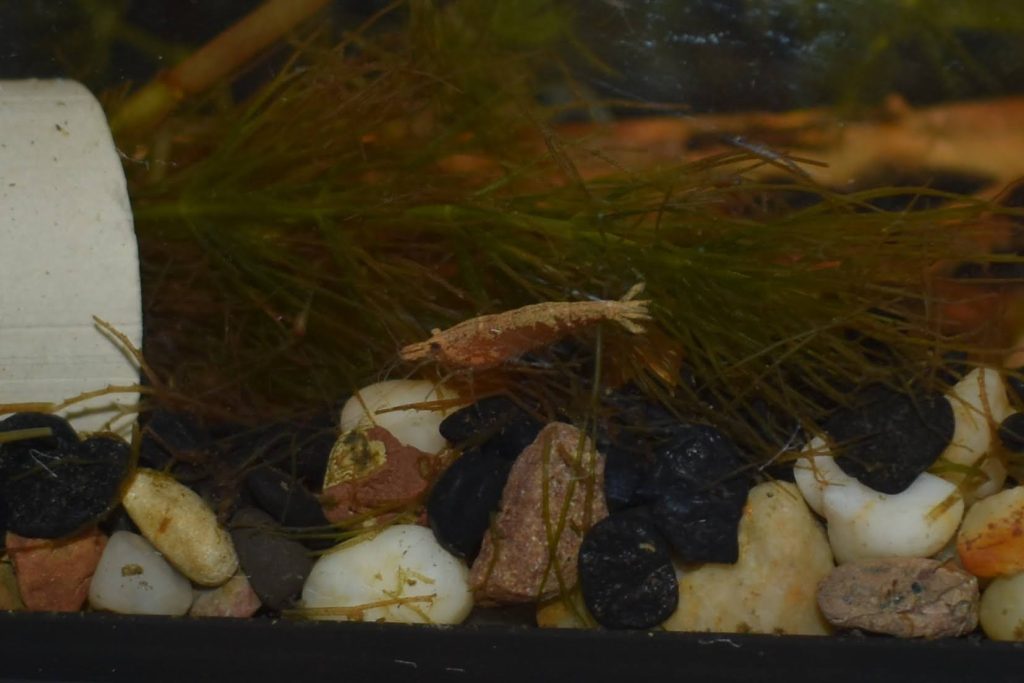
Tank 1 is home to a colony of Skittles: Neocaridina davidi in a mix of colors instead of one. Red, yellow, orange, blue and green shrimp, all the same species, all in one tank.
Where they came from
I ordered five. Eight showed up, with three bonus shrimp tucked into the java moss they shipped with. The last one didn’t turn up until I went through the moss. They went in after about 40 minutes on a drip and started eating right away. The full story is in the tank logs.
Why a mix is different
Every Neocaridina color is the same species, so they all interbreed freely. In a mixed colony, the colors scramble over the generations, and the babies drift back toward the plain brown or clear look of wild shrimp. Breeders keep pure lines by keeping each color separate and culling off-colors.
So a Skittles tank is a bit of an experiment. Some babies will come out bright, many will be muted, and that’s part of the fun. If I want a pure color line later, that’s what a second tank is for.
How the water compares
Neocaridina are the forgiving shrimp, which is why they’re the usual first pick. Here’s Tank 1’s latest reading next to the range commonly recommended for them:
| Test | Tank 1 (Nov 26) | Neocaridina comfort zone |
|---|---|---|
| pH | 7.5 | about 6.5–8 |
| GH | 120 ppm (about 6.7°dGH) | about 6–12°dGH |
| KH | 120 ppm (about 6.7°dKH) | about 2–8°dKH |
| TDS | 232 ppm | about 150–300 ppm |
| Temperature | 76.5°F | about 65–80°F |
| Ammonia / nitrite | 0.25 / 0.25 ppm | 0 ppm |
Everything sits in range except the two that count most: ammonia and nitrite still aren’t zero while the tank finishes cycling. That’s the whole point of the name. Tank 1 isn’t in the Zero ppm Club yet.
Leave a Reply